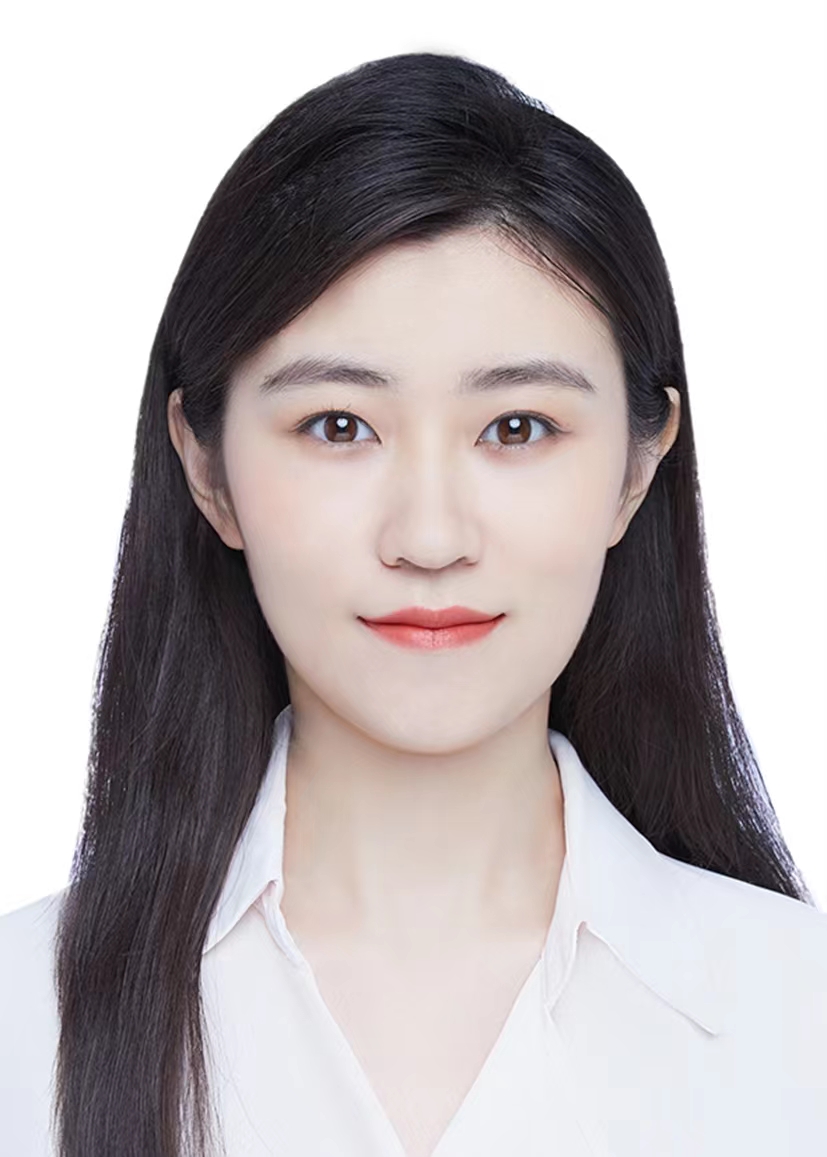
I am currently a Research Engineer at the Center for Data Science in Clinical Medicine, Peking University Third Hospital. Before that, I received my Ph.D. in Data Science from the Academy for Advanced Interdisciplinary Studies, Peking University, and later worked as a Postdoctoral Researcher at the School of Computer Science, Peking University. Both stages were under the supervision of Prof. Yizhou Wang.
My research interests lie in the area of artificial intelligence for medical image diagnosis. My research goal is to design cognitive-inspired medical image diagnostics algorithms, including clinical prior modeling and causal inference and develop efficient, effective, truthful, and robust AI-assistant medical image diagnostics systems. A key aspect of my research methodology is my dedication to understanding and addressing clinicians’ practical needs. I allocate at least 20% of my time to engaging with clinical practitioners, ensuring my work is grounded in real-clinical challenges and informed by frontline insights. This collaboration helps bridge the gap between advanced AI techniques and clinical practice, ensuring the AI systems I develop are sensitive to medical diagnostics’ nuances and seamlessly integrate into clinical workflows to enhance healthcare professionals’ capabilities and ultimately benefit patient care.
I have developed two Breast Imaging Diagnostic Systems, including Intelligent Breast MRI Diagnosis System and Intelligent Mammography X-ray Diagnosis System, which improve the diagnostic accuracy, robustness and efficiency. These systems have been widely deployed in hundreds of hospitals in China and served over a million clinical diagnostic cases.
🔥 News
- 2026.05 🎉🎉 One paper about clinically grounded counterfactual reasoning for medical video diagnosis was accepted by CVPR’26.
- 2026.05 🎉🎉 One paper about cross-embodiment active visual tracking is available online in IEEE RA-L.
- 2025.10 🎉🎉 One paper about photo-realistic virtual worlds for Embodied AI was accepted by ICCV’25.
- 2025.10 🎉🎉 One paper about self-improving VLMs for embodied visual tracking was accepted by IROS’25.
- 2025.04 🎉🎉 One paper about 3D medical image representation was accepted by AAAI’25.
- 2025.04 🎉🎉 One paper about breast MRI segmentation and molecular subtype classification was published in Radiology: Imaging Cancer.
- 2024.07 🎉🎉 One paper about Embodied Cognition was accepted by ECCV’24.
- 2024.06 🎉🎉 One paper about Medical Self-Supervised Representation Learning was accepted by MICCAI’24.
- 2024.04 🎉🎉 Talk at NVIDIA “AI Medical Innovation and Application Seminar” in Shanghai.
- 2023.05 🎉🎉 One paper about Domain-Agnostic Representation Learning was accepted by ICLR’23.
📝 Selected Publications
* : co-first author, ✉ : corresponding author
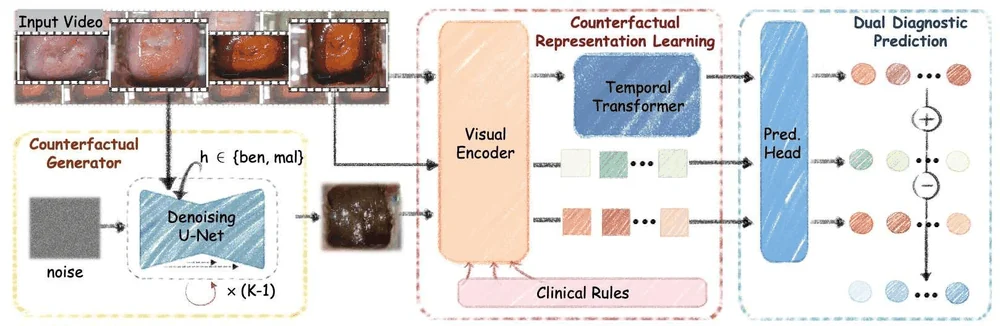
Clinically-Grounded Counterfactual Reasoning for Medical Video Diagnosis
Jianzhe Gao, Churan Wang✉, Weiyi Zhang, Jianghua Li, Li-An Li, Wenguan Wang, Yixin Zhu, Yizhou Wang
IEEE/CVF Conference on Computer Vision and Pattern Recognition (CVPR), 2026
- Introduce MEDVCR, a clinically grounded counterfactual reasoning framework for medical video diagnosis that models disease-state alternatives with clinical priors.
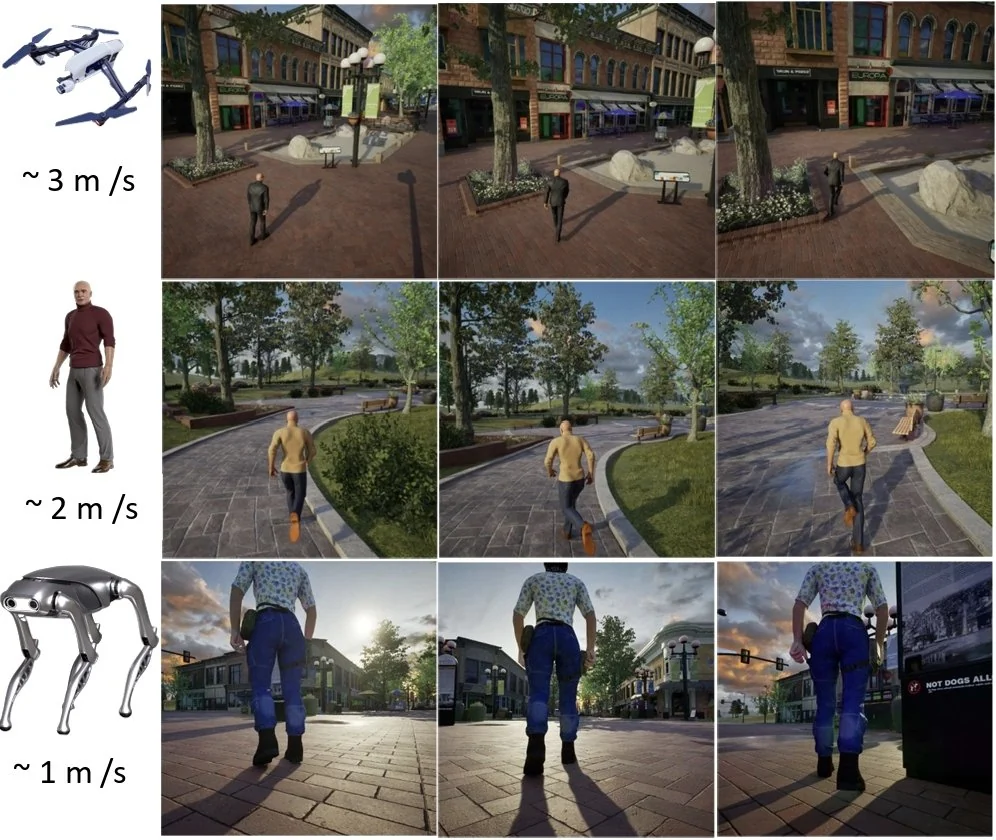
AdaTracker: Learning Adaptive In-Context Policy for Cross-Embodiment Active Visual Tracking
Kui Wu, Hao Chen, Jinzhu Han, Haijun Liu, Churan Wang, Yizhou Wang, Zhoujun Li, Si Liu, Fangwei Zhong
IEEE Robotics and Automation Letters (RA-L), 2026
- An adaptive in-context policy for cross-embodiment active visual tracking, enabling zero-shot generalization via an Embodiment Context Encoder.
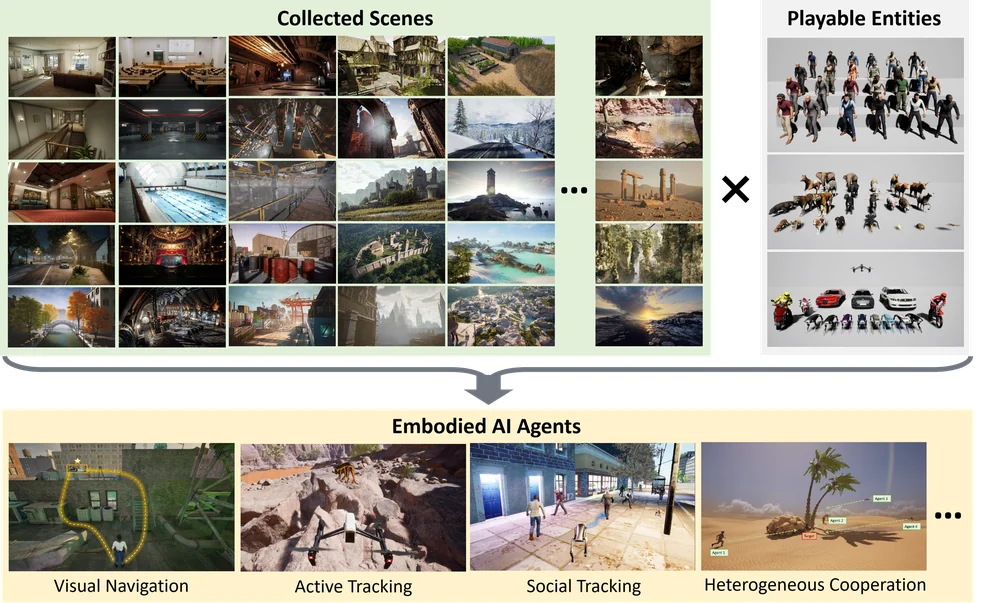
UnrealZoo: Enriching Photo-realistic Virtual Worlds for Embodied AI
Fangwei Zhong* ✉, Kui Wu*, Churan Wang, Hao Chen, Hai Ci, Zhoujun Li, Yizhou Wang
IEEE/CVF International Conference on Computer Vision (ICCV), 2025 (Highlight)

- A rich collection of photo-realistic 3D virtual worlds built on Unreal Engine, designed to reflect the complexity and variability of the open worlds.
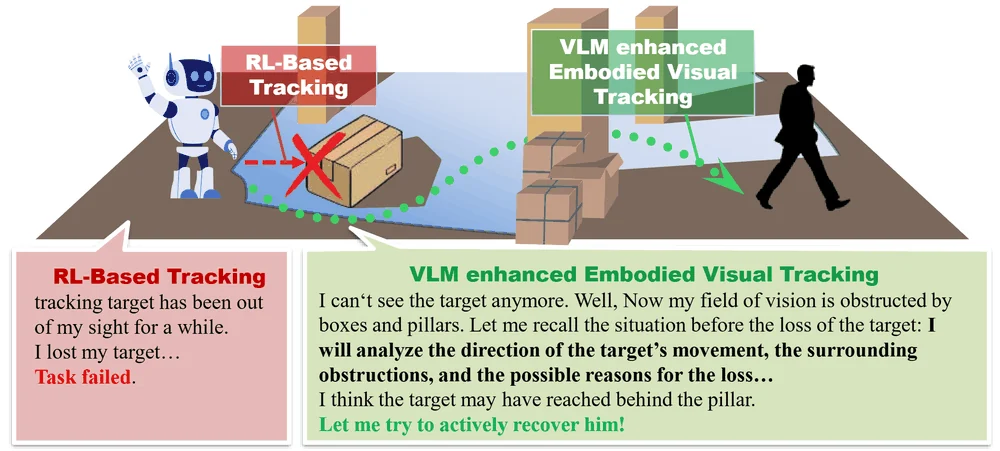
VLM Can Be a Good Assistant: Enhancing Embodied Visual Tracking with Self-Improving Vision-Language Models
Kui Wu, Shuhang Xu, Hao Chen, Churan Wang, Zhoujun Li, Yizhou Wang, Fangwei Zhong
IEEE/RSJ International Conference on Intelligent Robots and Systems (IROS), 2025
- A self-improving framework that enhances Embodied Visual Tracking (EVT) with Vision-Language Models (VLMs) to recover tracking from failure.
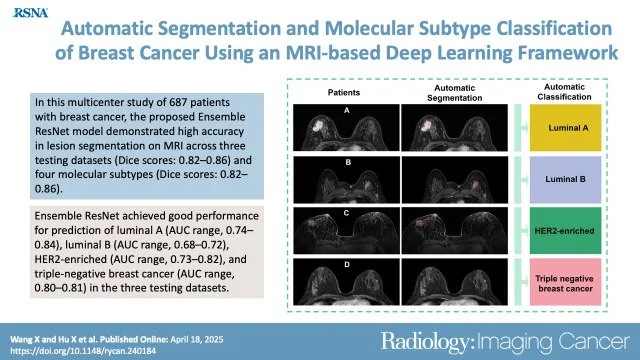
Automatic Segmentation and Molecular Subtype Classification of Breast Cancer Using an MRI-based Deep Learning Framework
Xiaoxia Wang, Xiaofei Hu, Churan Wang, Hua Yang, Yan Hu, Xiaosong Lan, Yao Huang, Ying Cao, Lijun Yan, Fandong Zhang, Yizhou Yu, Jiuquan Zhang
Radiology: Imaging Cancer, 2025
- Develop an MRI-based deep learning framework for automatic breast cancer segmentation and molecular subtype classification.
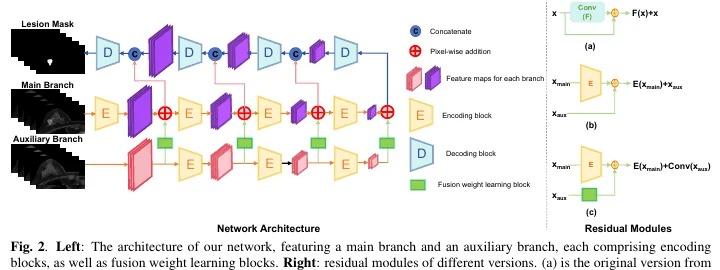
Clinical Inspired MRI Lesion Segmentation
Lijun Yan, Churan Wang, Fangwei Zhong, Yizhou Wang
IEEE International Symposium on Biomedical Imaging (ISBI), 2025
- Introduce a clinically inspired MRI lesion segmentation framework that leverages multi-sequence MRI priors for accurate and consistent lesion delineation.
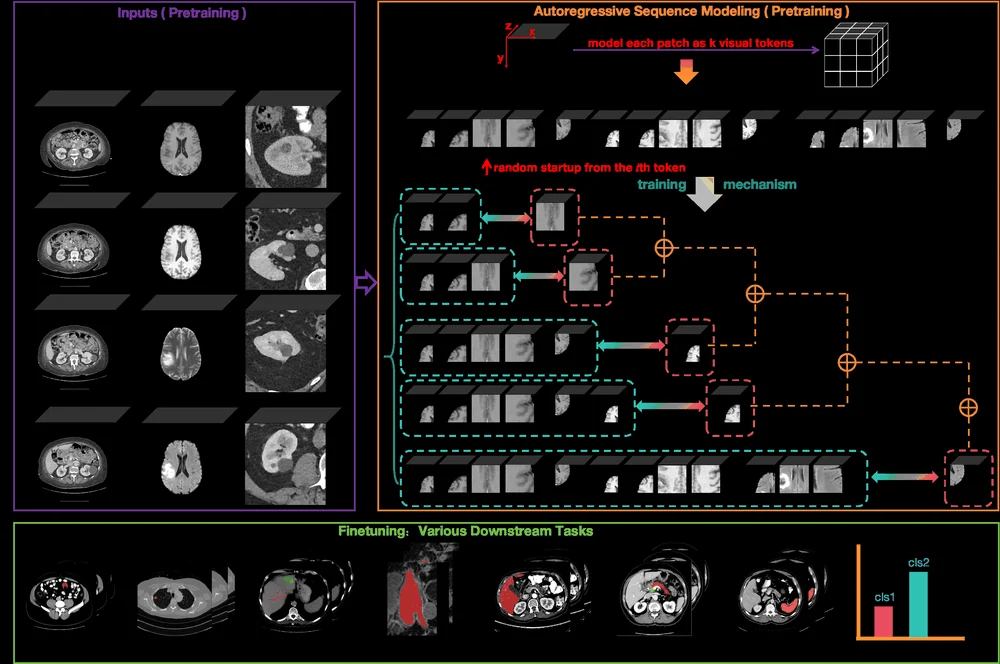
Autoregressive Sequence Modeling for 3D Medical Image Representation
Siwen Wang, Churan Wang, Fei Gao, Lixian Su, Fandong Zhang, Yizhou Wang, Yizhou Yu
Proceedings of the AAAI Conference on Artificial Intelligence (AAAI), 2025
- Model 3D medical images as autoregressive sequences to learn general-purpose volumetric representations across organs and imaging modalities.
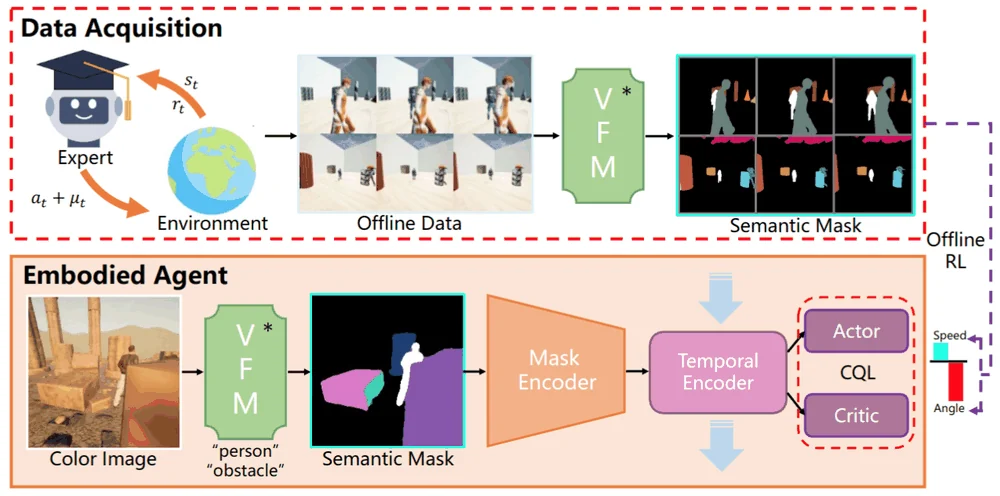
Empowering Embodied Visual Tracking with Visual Foundation Models and Offline RL
Fangwei Zhong, Kui Wu, Hai Ci, Churan Wang, Hao Chen
The 18th European Conference on Computer Vision (ECCV), 2024
- Significantly enhanced the understanding and adaptive capabilities of systems in dynamic environments with visual foundation models and offline RL.
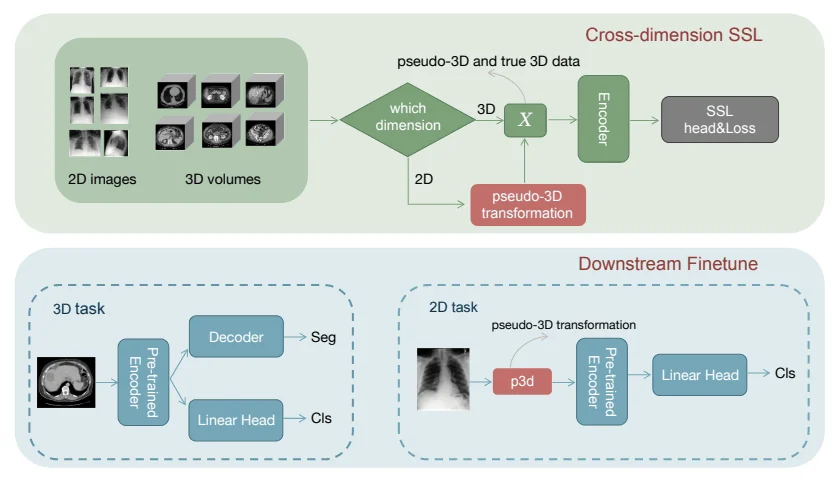
Cross-Dimensional Medical Self-Supervised Representation Learning Based on a Pseudo-3D Transformation
Fei Gao, Siwen Wang, Fandong Zhang, Hong-Yu Zhou, Yizhou Wang, Churan Wang✉, Gang Yu✉, Yizhou Yu✉
Medical Image Computing and Computer Assisted Intervention (MICCAI), 2024
- Integrate 2D and 3D medical imaging data through a pseudo-3D transformation, enhancing the efficiency and effectiveness of SSL for 3D medical image analysis and demonstrating superior performance across various downstream tasks.
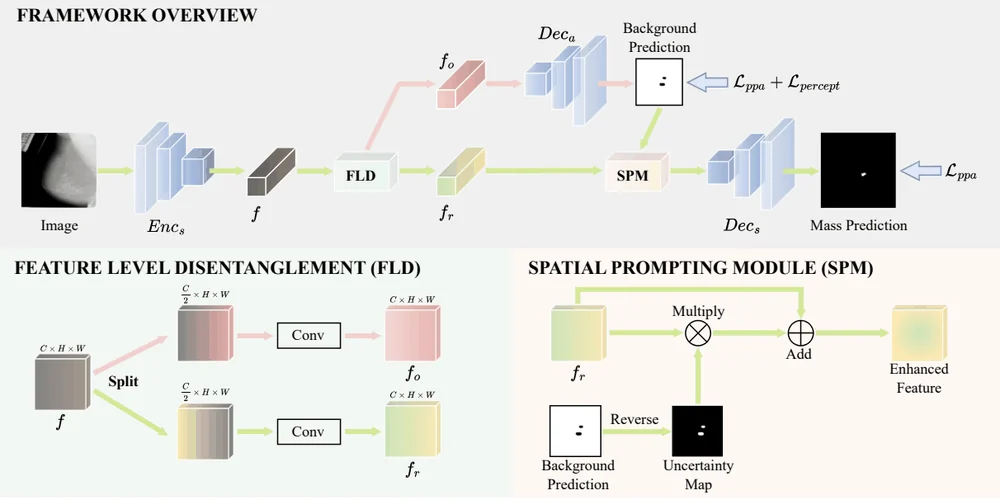
Semi-and Weakly-Supervised Learning for Mammogram Mass Segmentation with Limited Annotations
Xinyu Xiong, Churan Wang✉, Wenxue Li, Guanbin Li✉
IEEE International Symposium on Biomedical Imaging (ISBI), 2024
- Present a semi- and weakly-supervised learning framework for breast mass segmentation that effectively addresses the challenge of identifying small, camouflaged masses in breast cancer diagnosis and the high cost of pixel-wise annotations.
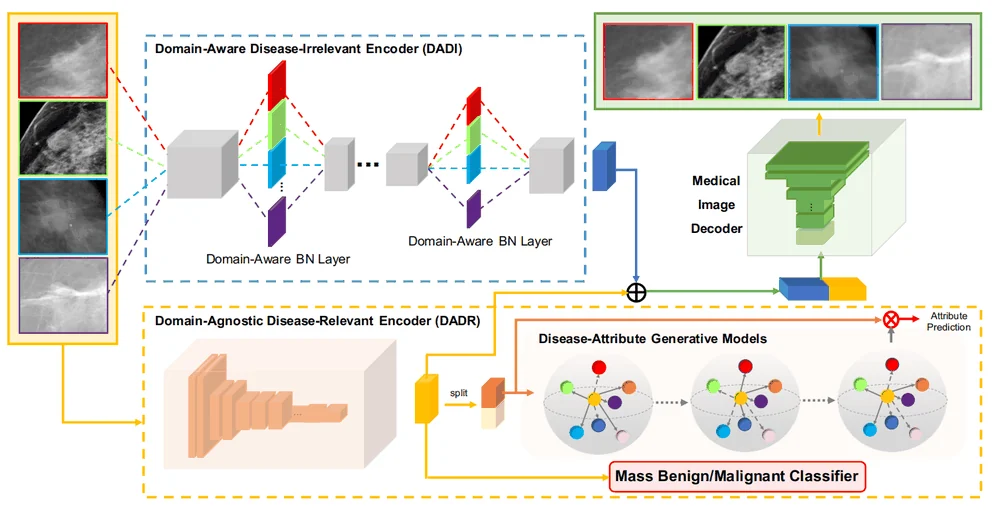
Learning Domain-agnostic Representation for Disease Diagnosis
Churan Wang, Jing Li, Xinwei Sun, Fandong Zhang, Yizhou Yu, Yizhou Wang
The Eleventh International Conference on Learning Representations (ICLR), 2023
- Disentangle disease-related features from center-effects, enhancing robustness in multi-center image-based diagnosis.
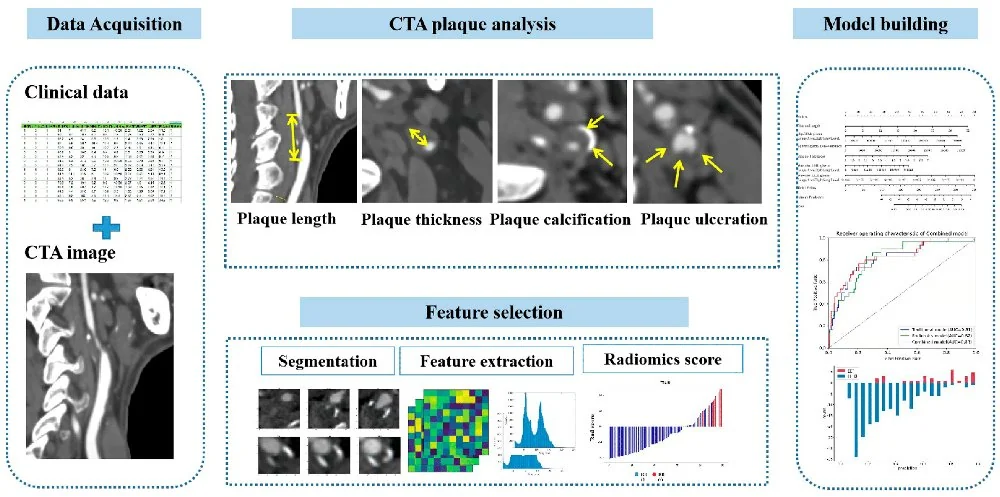
Prediction of Carotid In-Stent Restenosis by Computed Tomography Angiography Carotid Plaque-Based Radiomics
Xiaoqing Cheng, Zheng Dong, Jia Liu, Hongxia Li, Changsheng Zhou, Fandong Zhang, Churan Wang, Zhiqiang Zhang, Guangming Lu
Journal of Clinical Medicine (JCM), 2022
- Retrospectively analyze clinical imaging data to identify independent predictors of in-stent restenosis following carotid artery stenting, demonstrating that a combination of traditional plaque characteristics and radiomic features provides the highest predictive accuracy for post-procedure outcomes.
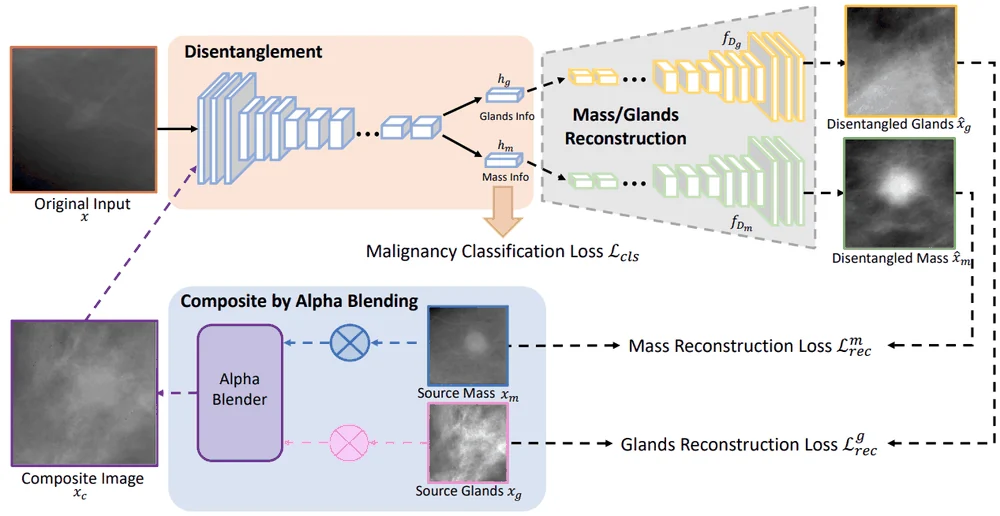
Disentangling Disease-related Representation from Obscure for Disease Prediction
Churan Wang, Fei Gao, Fandong Zhang, Fangwei Zhong, Yizhou Yu, Yizhou Wang
International Conference on Machine Learning (ICML), 2022
- A disentanglement learning strategy under the guidance of alpha blending generation in an encoder-decoder framework (DAB-Net).
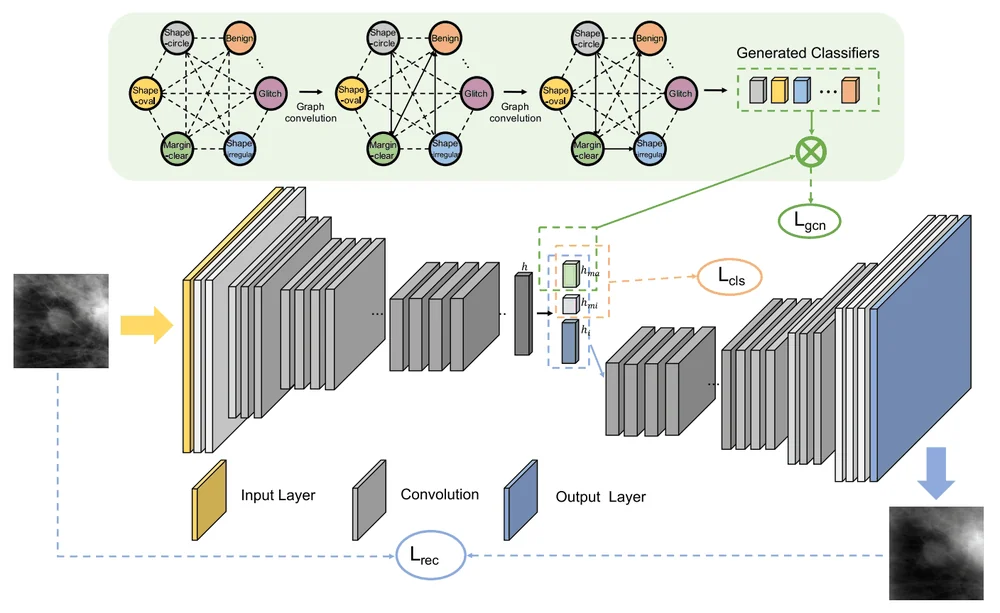
Dae-gcn: Identifying Disease-related Features for Disease Prediction
Churan Wang, Xinwei Sun, Fandong Zhang, Yizhou Yu, Yizhou Wang
Medical Image Computing and Computer Assisted Intervention (MICCAI), 2021
- Learning disease-related representations in medical images by integrating a disentangling mechanism with graph convolutional network, which significantly enhances the performance and interpretability of cancer diagnosis.
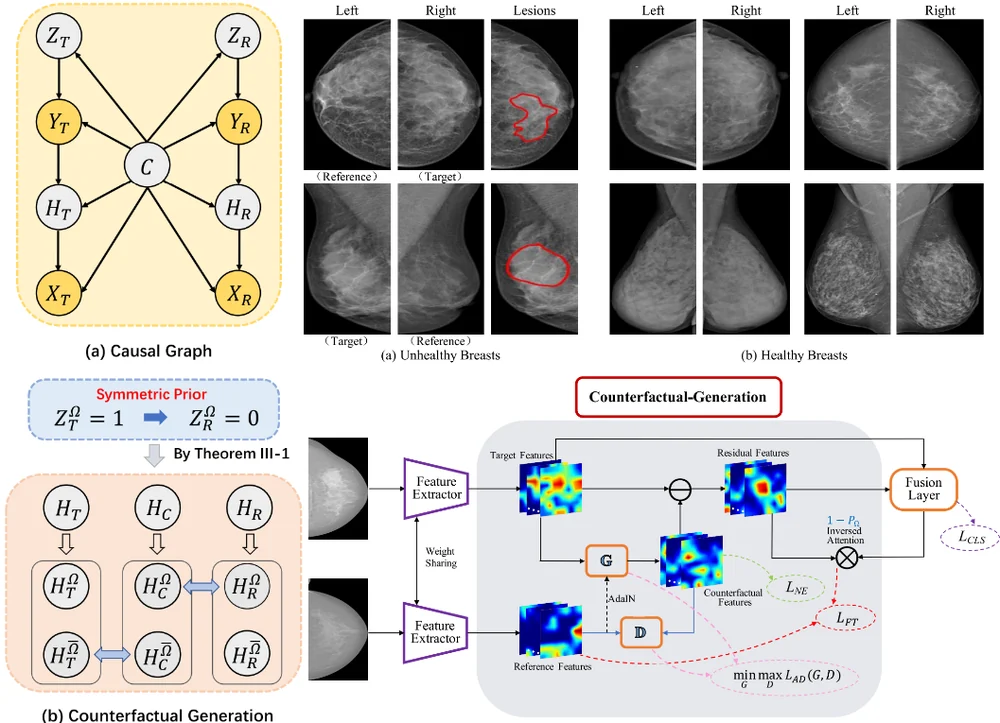
Bilateral Asymmetry Guided Counterfactual Generating Network for Mammogram Classification
Churan Wang*, Jing Li*, Fandong Zhang, Xinwei Sun, Hao Dong, Yizhou Yu, Yizhou Wang
IEEE Transactions on Image Processing (TIP), 2021
- Introduce a counterfactual generative network leveraging the bilateral symmetry prior to enhance mammogram diagnosis performance.
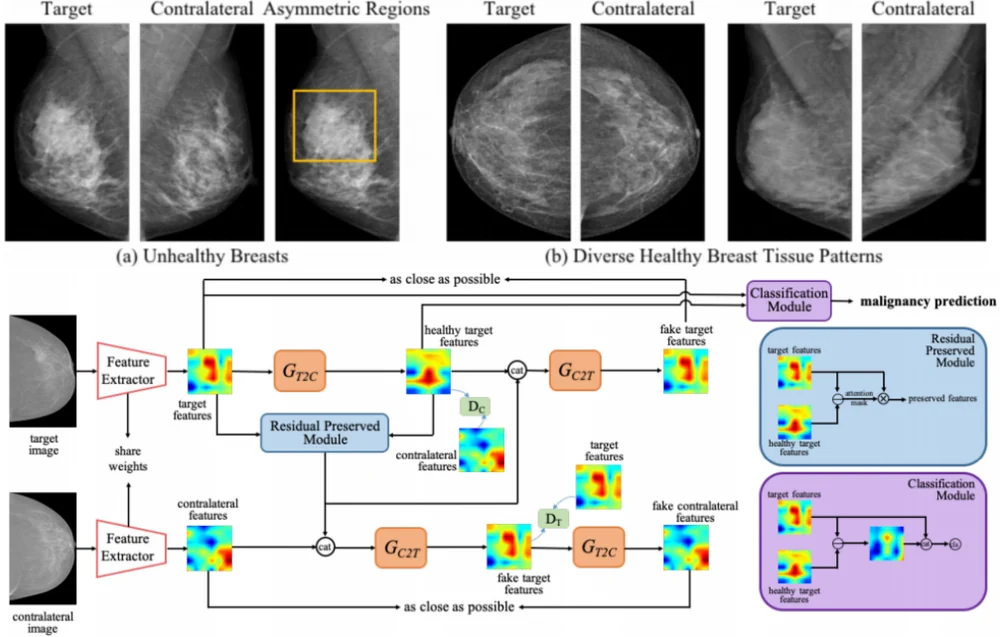
BR-GAN: Bilateral Residual Generating Adversarial Network for Mammogram Classification
Churan Wang, Fandong Zhang, Yizhou Yu, Yizhou Wang
Medical Image Computing and Computer Assisted Intervention (MICCAI), 2020
- Propose a residual-preserved mechanism with CycleGAN framework based on the bilateral symmetry prior to generate healthy mammogram features for malignancy classification.
🎖 Selected Honors and Awards
- 2021 Peking University President’s Scholarship.
- 2020 Baosteel Outstanding Student Scholarship.
- 2020 Merit Student in Peking University.
- 2018 Peking University Social Work Award.
- 2017 Outstanding Graduate in Beijing.
- 2016 Merit Student in Beijing.
- 2016 Li Siguang Outstanding Student Award (At most 5 undergrads nationwide per year).
- 2015 China National Scholarship.
- 2014 China National Scholarship.
📖 Educations
- 2017.09 - 2022.07, Peking University, Ph.D in Data Science.
- 2013.09 - 2017.07, China University of Petroleum, B.S. in Surveying and Prospecting Technology and Engineering.
💻 Professional Service
- Journal Reviewer: IEEE Transactions on Image Processing
- Conference Reviewer: International Conference on Machine Learning (ICML) 2022, Conference on Neural Information Processing Systems (NeurIPS) 2022/23/24, International Conference on Learning Representations (ICLR) 2023, Computer Vision and Pattern Recognition Conference (CVPR) 2021/22/23, International Conference on Computer Vision (ICCV) 2021, Medical Image Computing and Computer Assisted Intervention (MICCAI) 2021/22/23/24
- PC Member: AAAI 2023/24